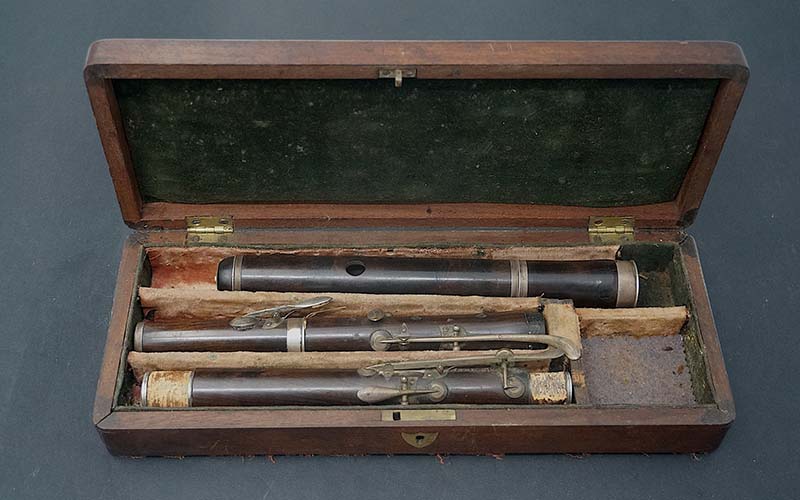
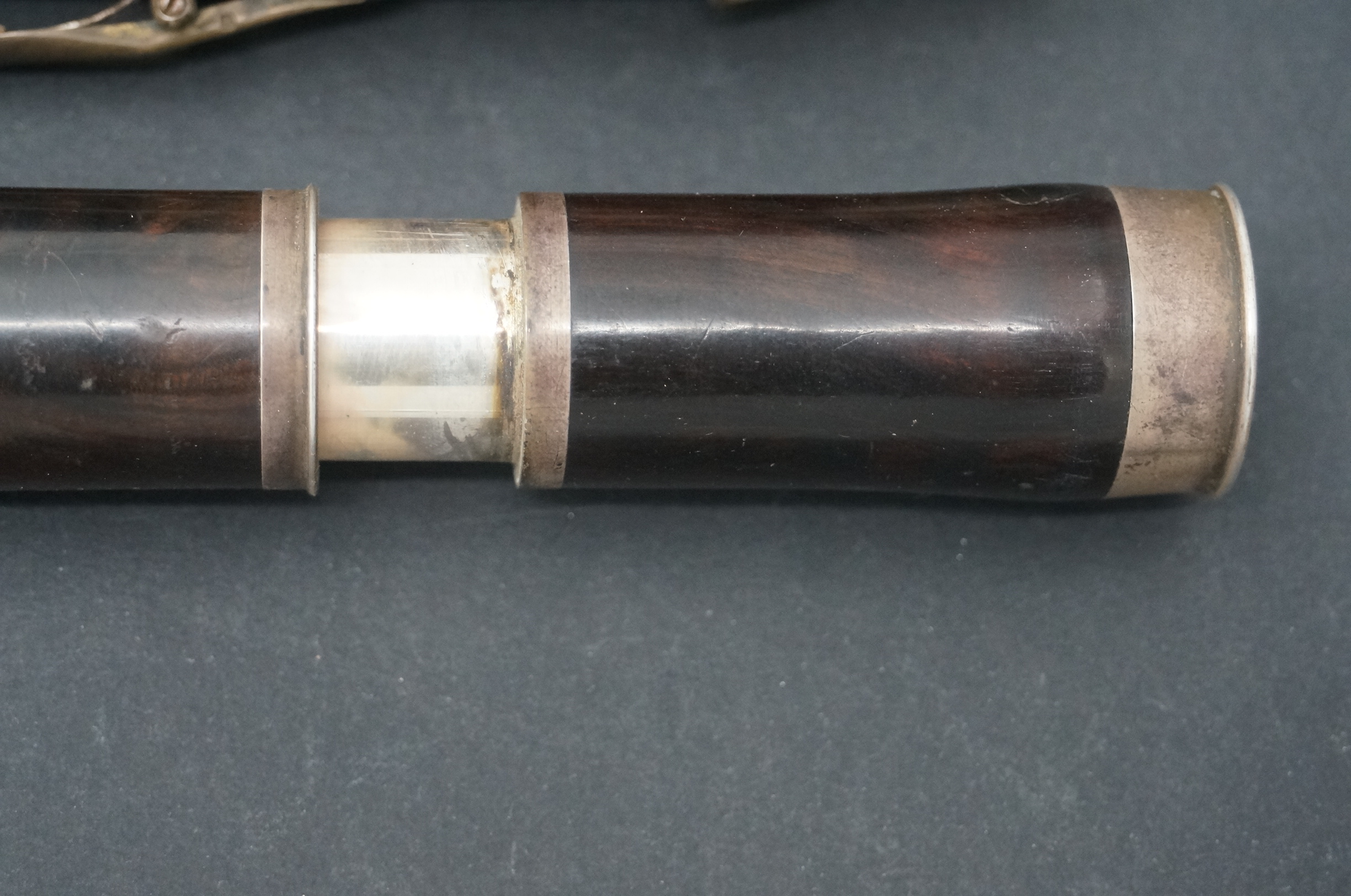
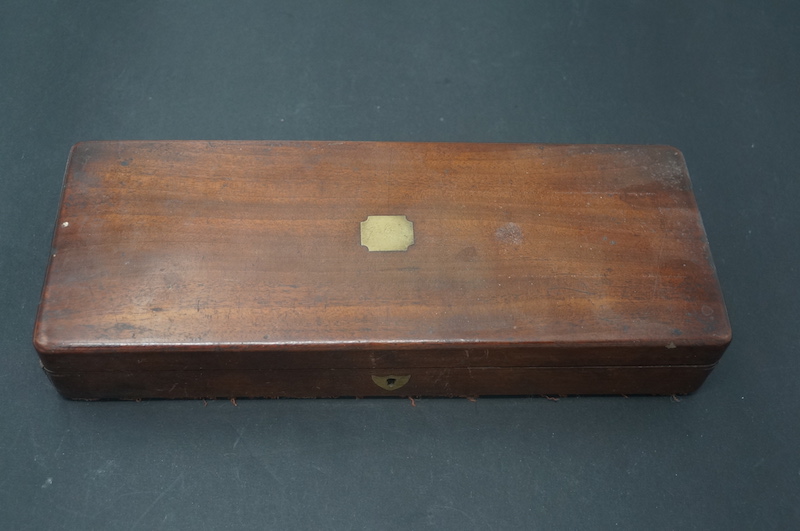
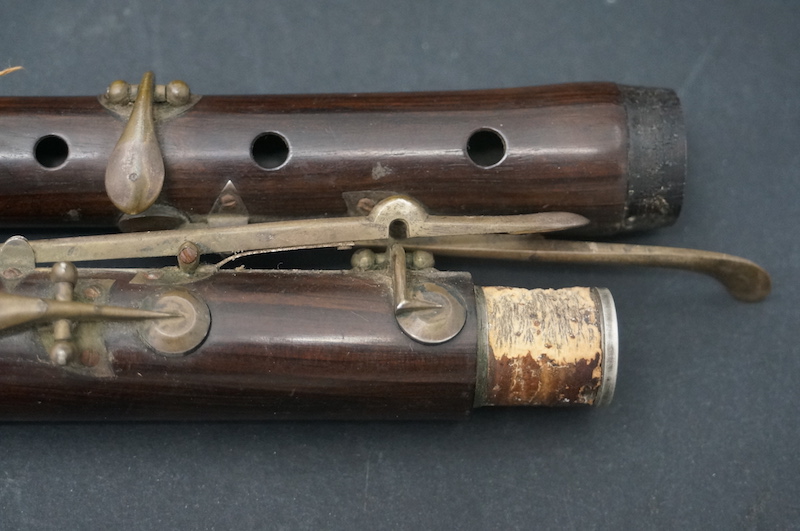
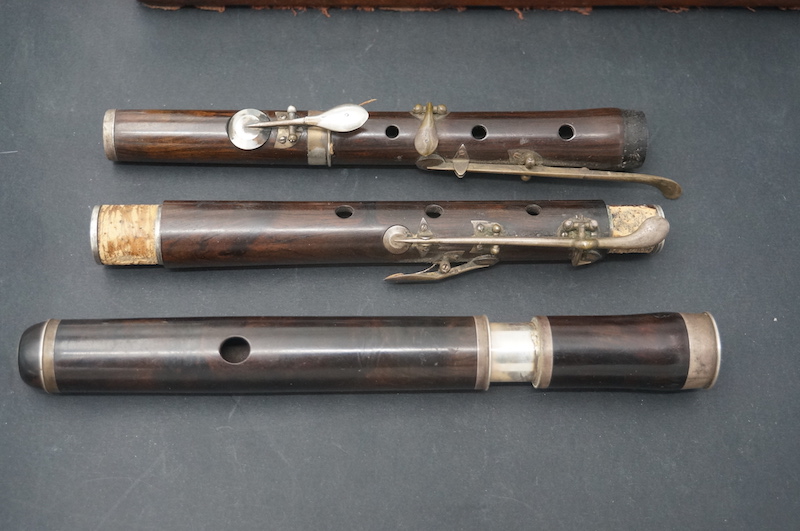
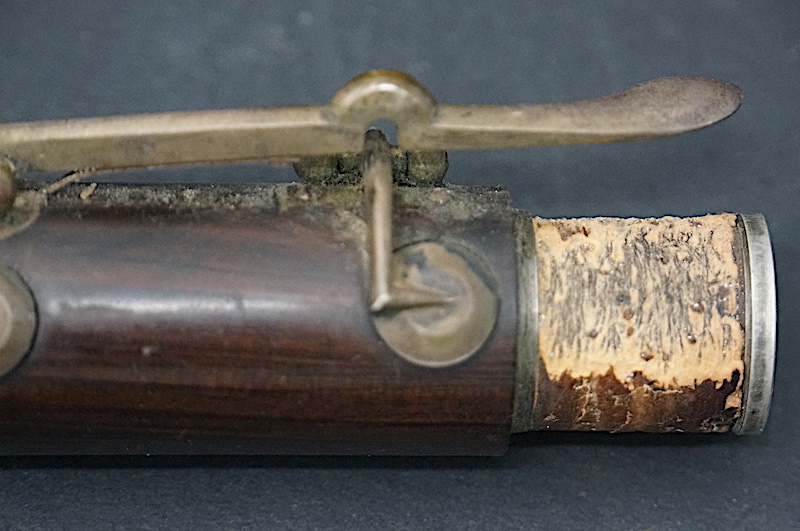
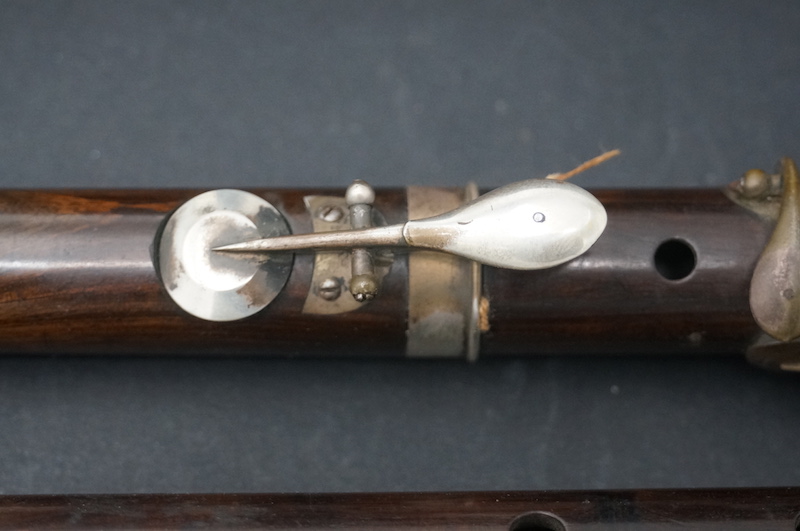
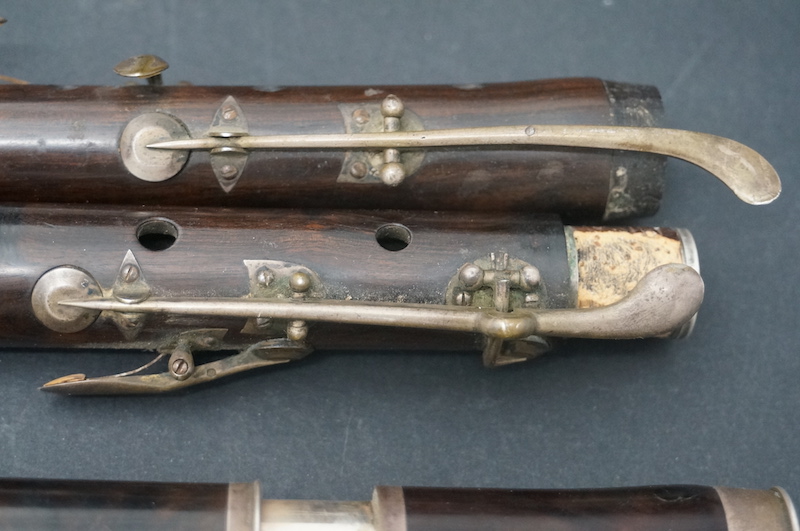
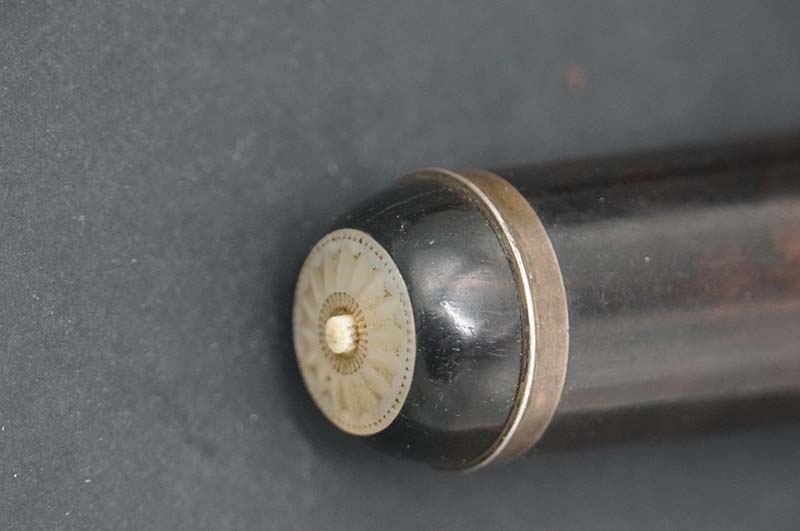
I'd like to point out right away that the attribution to Clair Godfroy is my hypothesis based on an examination of the instrument, which features a meticulous finish, the use of silver keys and rings, and above all the typical G-sharp key, which on early Godfroys featured a characteristic 90-degree bend in the key lever. Naturally, I carefully examined the instrument for the mark of Godfroy or others, but unsuccesfully. I might even suggest, if not Godfroy, Buffet Auger, who, however, typically used brass keys. The instrument dates back to the 1830s, when wooden key supports had just been abandoned in favor of screwed-on plate ones; even the size of the small note holes suggests a proximity to the baroque characteristics; the process of enlarging the key holes to achieve greater volume had not yet begun, which made the use of keys necessary since the large holes did not allow for the production of certain notes with the forked position. The instrument retains all the charm of its nearly two hundred years of existence, which is why I didn't even polished the keys. There is a hairline crack on the sliding section, which, however, is lined internally with silver tubing. The flute, apart from a piece of the G-sharp lever missing, is otherwise in excellent condition. Ver nice cap. Obviously, the pads need replacing and the action checked.Weight is 305 g, Overall lenght is 620 mm, sounding lenght is 540 mm and the pitch is 435. The price is for a 1830 flute, if Godfroy's would be higher.