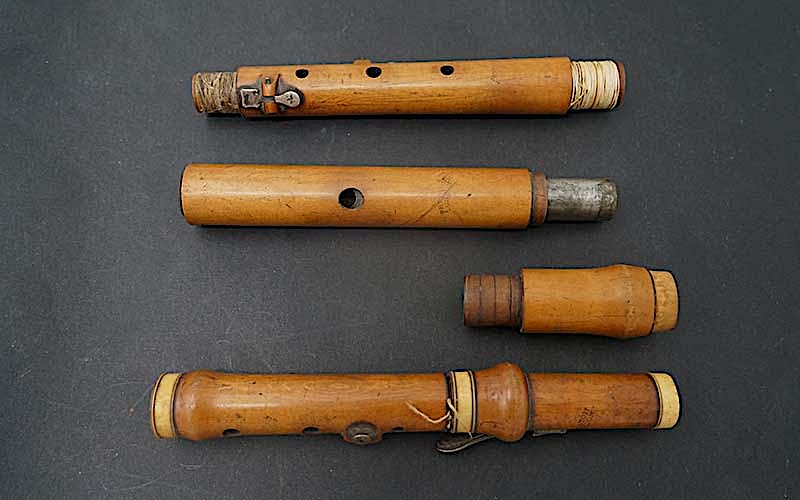
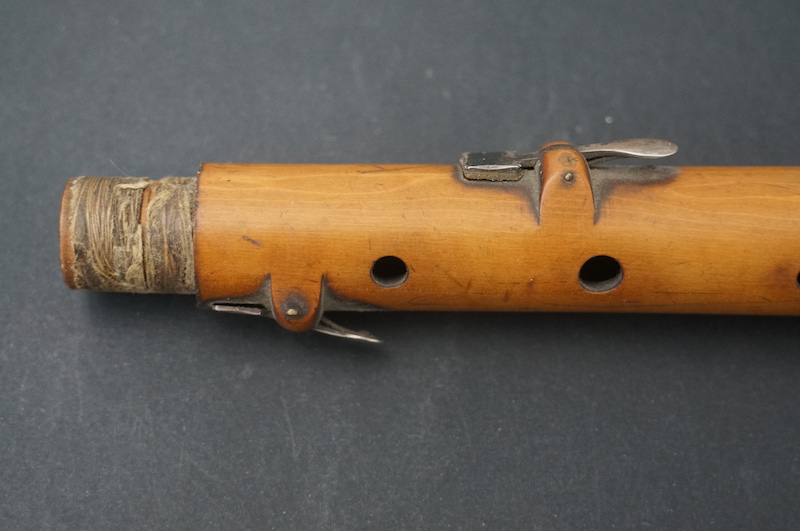
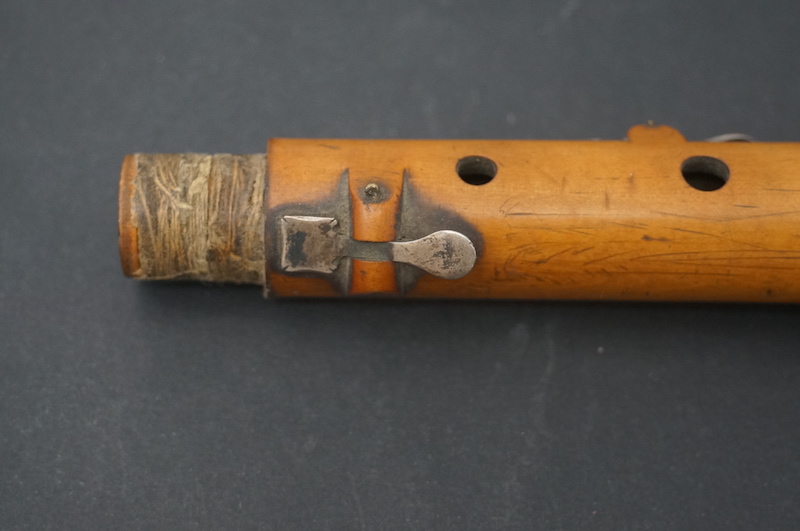
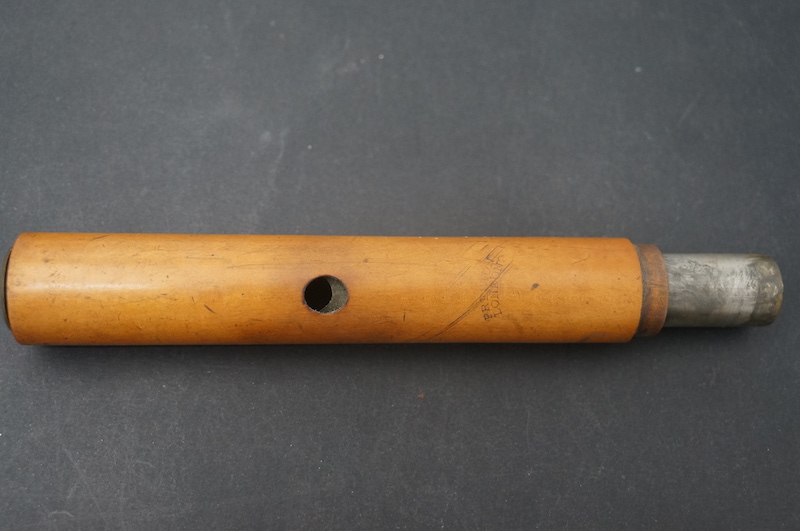
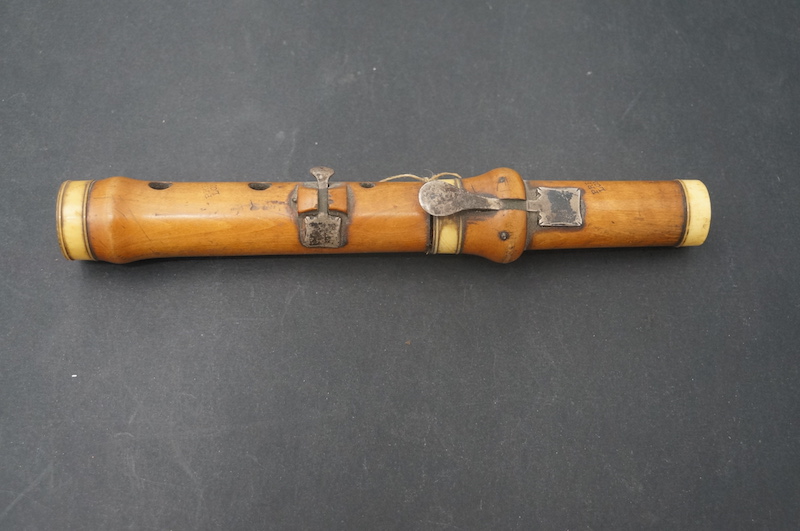
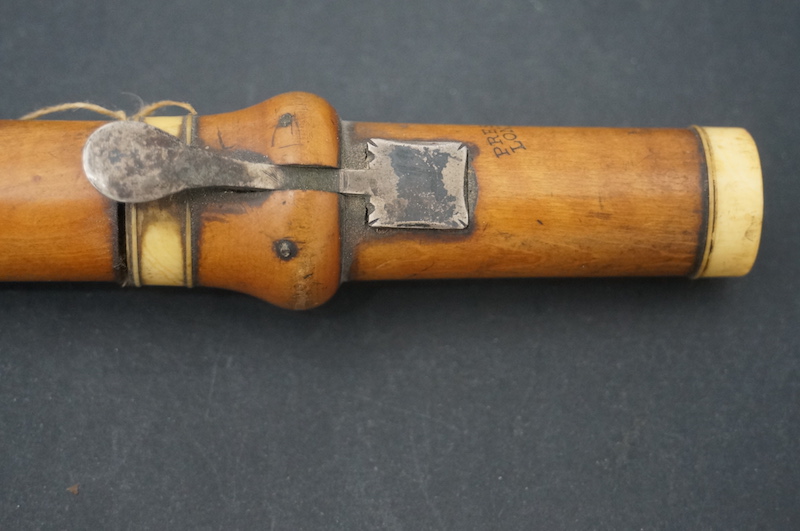
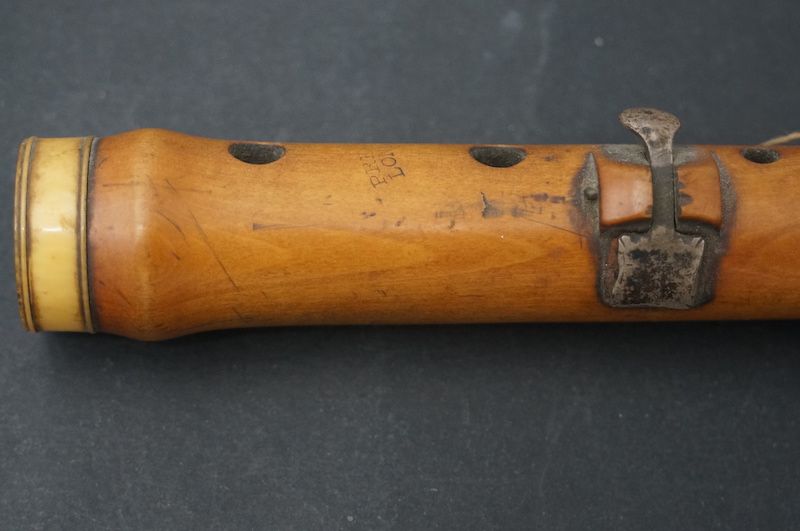
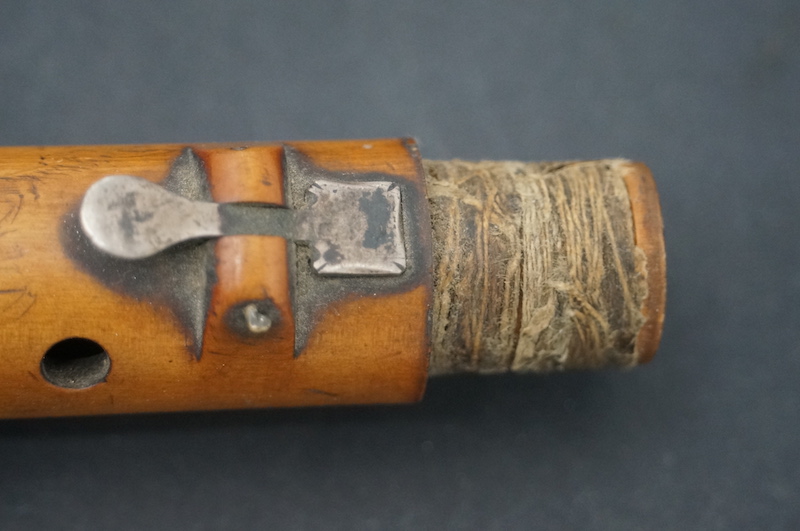
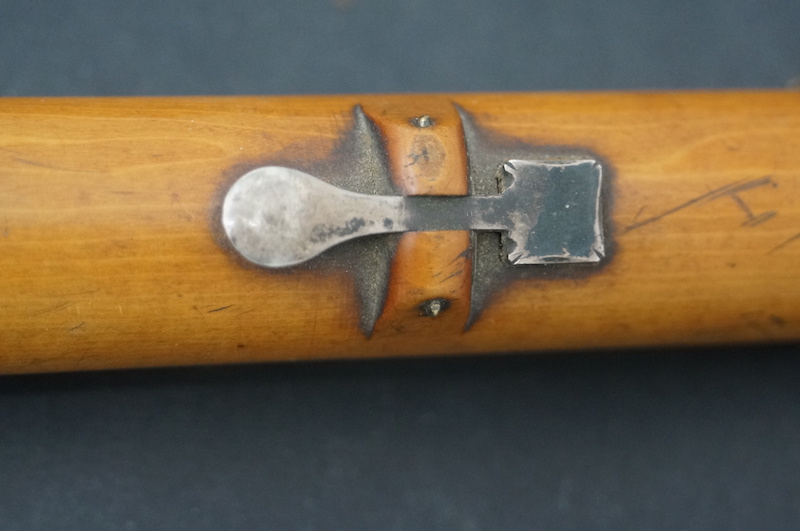
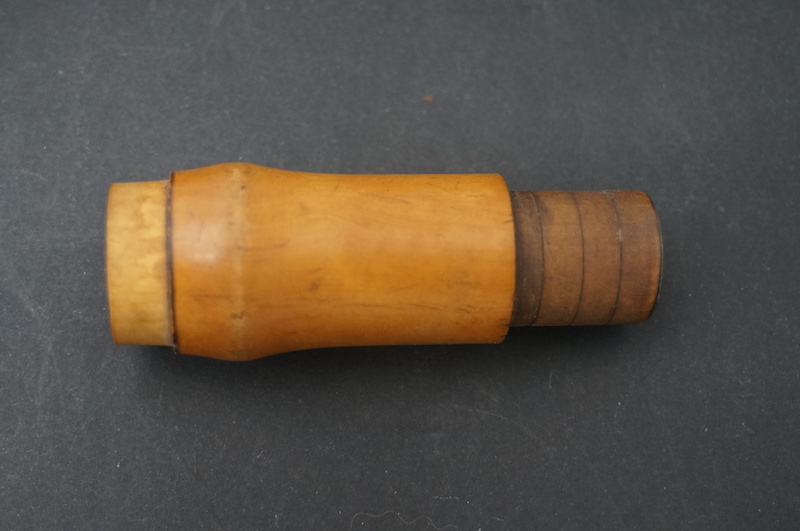
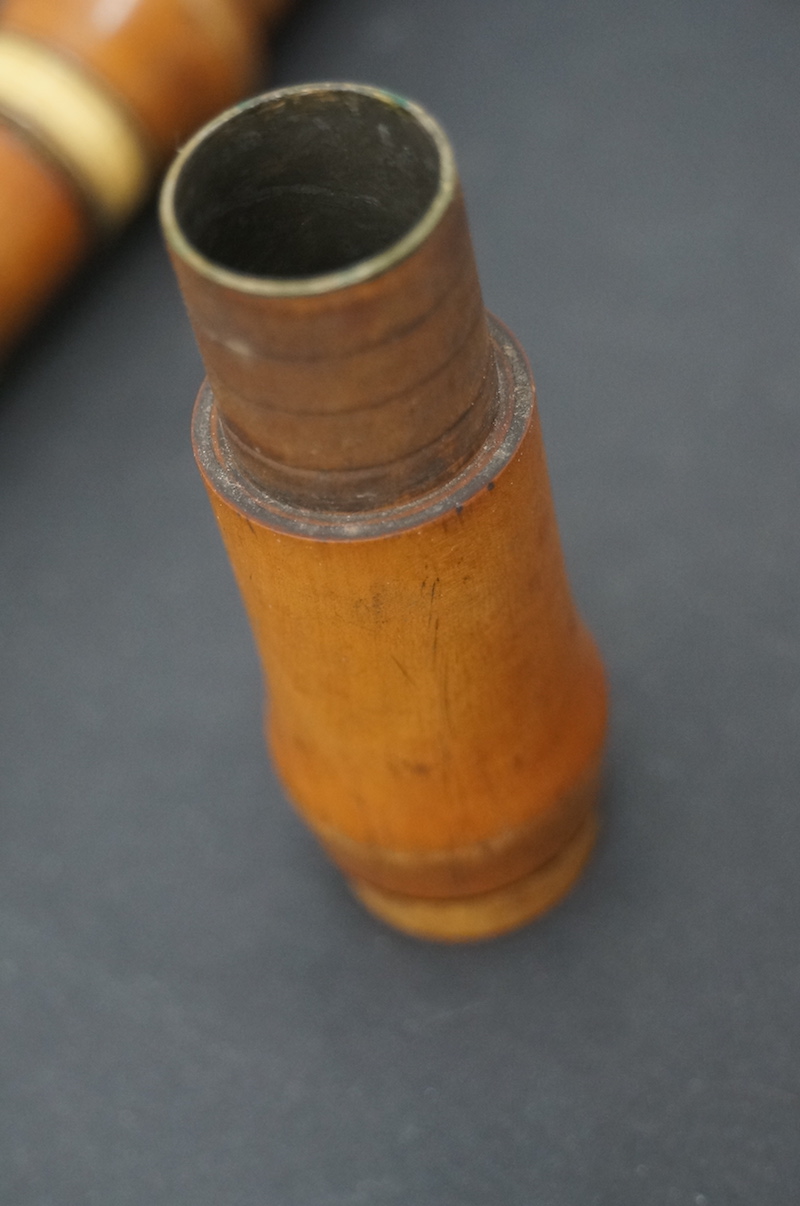
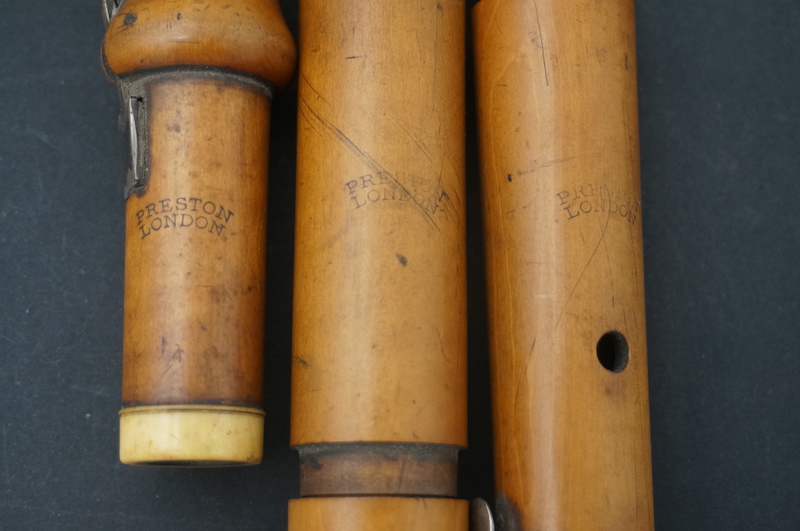
Here we have a very old and very interesting flute by John Preston,(1776-1834). It is one of the very first four keys flutes (F, G#, Bb, and D#) which was built with the intention of execute pieces in keys that were difficult to play in speed and correct intonation) on a single-keyed flute. In fact, the idea of drilling a hole in the body of the flute in order to obtain a note in tune and easy to play in rapid passages was not wrong. This began a process of multiplication of keys that led to flutes derived from the baroque flute being equipped with 12 or more keys (also to facilitate trills), while the need to give the flute a greater voice led to the modern flute designed by the German musician and inventor Theobald Boehm. These profound transformations of the original baroque flute encountered strong resistance; Francois Devienne already criticized the use of keys, Jean Louis Tulou recommended only a few, while regarding the Boehm flute, Raymond Meylan expressed the hypothesis that this flute could not be linked to the evolution of the baroque flute but was a completely new and different instrument. Here we have a beautiful example of a four-keyed Baroque flute dating back to the late 18th century. The key supports are built into the body of the instrument, the keys are very small, the wood is boxwood, and there is a tuning section that allowed the instrument to be tuned when played in an ensemble. I was unable to verify the pitch (probably 415) as the stopper is missing, and in any case the instrument needs restoration. The wood has no cracks, but one ring is missing. Its measurements are: weight 289 g, overall length 605 mm, sounding length 580 mm.