Euterpe
Historical Flutes
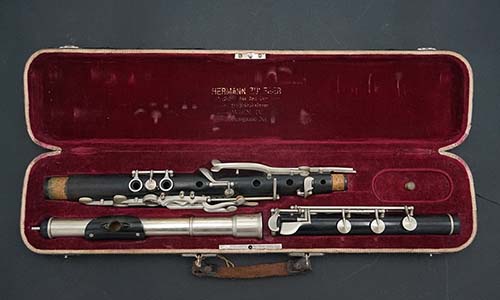
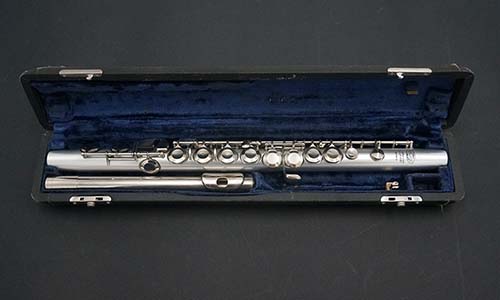
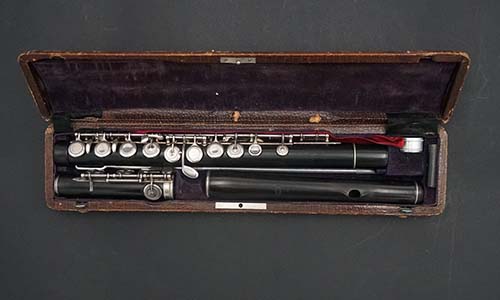
Theobald Boehm’s revolutionary flute was paradoxically not well received in Germany, as it was in France. Besides the understandable reluctance to learn a different fingering, the sound was too far from the Baroque conception of sound, which favored a fuller, more powerful sound, especially in the lower register. Thus, in Germany, the flute remained faithful to the evolution of the Baroque flute, which was taken to extremes, often significantly complicating the instrument’s mechanics. This does not mean that the Boehm flute, both in metal and wood, did not gradually gain popularity, but the Germans certainly pursued their own ideal of sound that has endured to the present day.